
Infrequent Strong Connections Constrain Connectomic Predictions of Neuronal Function
A summary of the paper:
Currier, T. A., & Clandinin, T. R. (2025). Infrequent strong connections constrain connectomic predictions of neuronal function. Cell.
2025-10-28
Core Message
Constrain: transitive verb - to force by imposed stricture, restriction, or limitation
— Merriam-Webster
Key Summary: A small number of sparse but strong connections (rather than all connections) carry most of the useful information, and these strong connections constrain which functions can be reliably predicted. This finding challenges the traditional view that all connections are equally important and reveals the essential mechanism underlying connectome-based functional predictions.
Background
Core Question
Main Problem: To what extent can functional properties of cells and circuits be predicted based on their morphology and synaptic connectivity? This question constitutes a central challenge in connectomics. While connectome mapping has revealed complete neural structural networks and theoretically enables prediction of neuronal function, most predictions lack large-scale physiological validation, and the broad predictive power of connectome data remains unclear.
Research Model: Drosophila Visual System
The Drosophila visual system is a fertile ground both for functional dissection and connectomic characterization, providing an ideal model for studying the relationship between connectomes and function. The system consists of the retina and four optic ganglia: Lamina, Medulla, Lobula, and Lobula plate, where the medulla serves as the obligatory pathway for visual signals. The medulla's advantages—constant morphology across individuals, rich cell type diversity, and complete connectome data—make it an ideal subject for investigation.
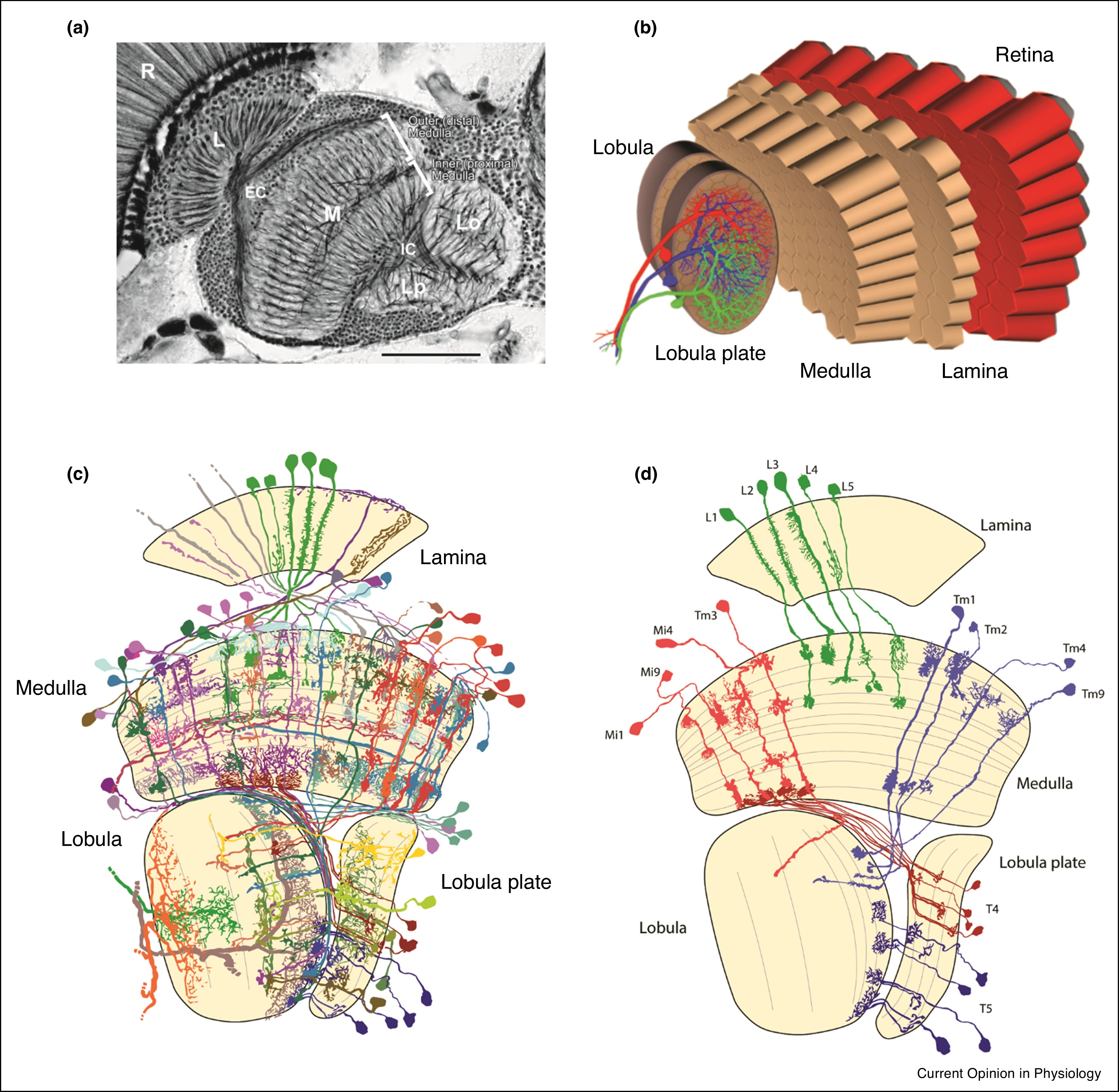
Figure source: Borst, A., Drews, M., & Meier, M. (2020). The neural network behind the eyes of a fly. Current Opinion in Physiology, 16, 33-42.
From Structure to Function: What Really Matters?
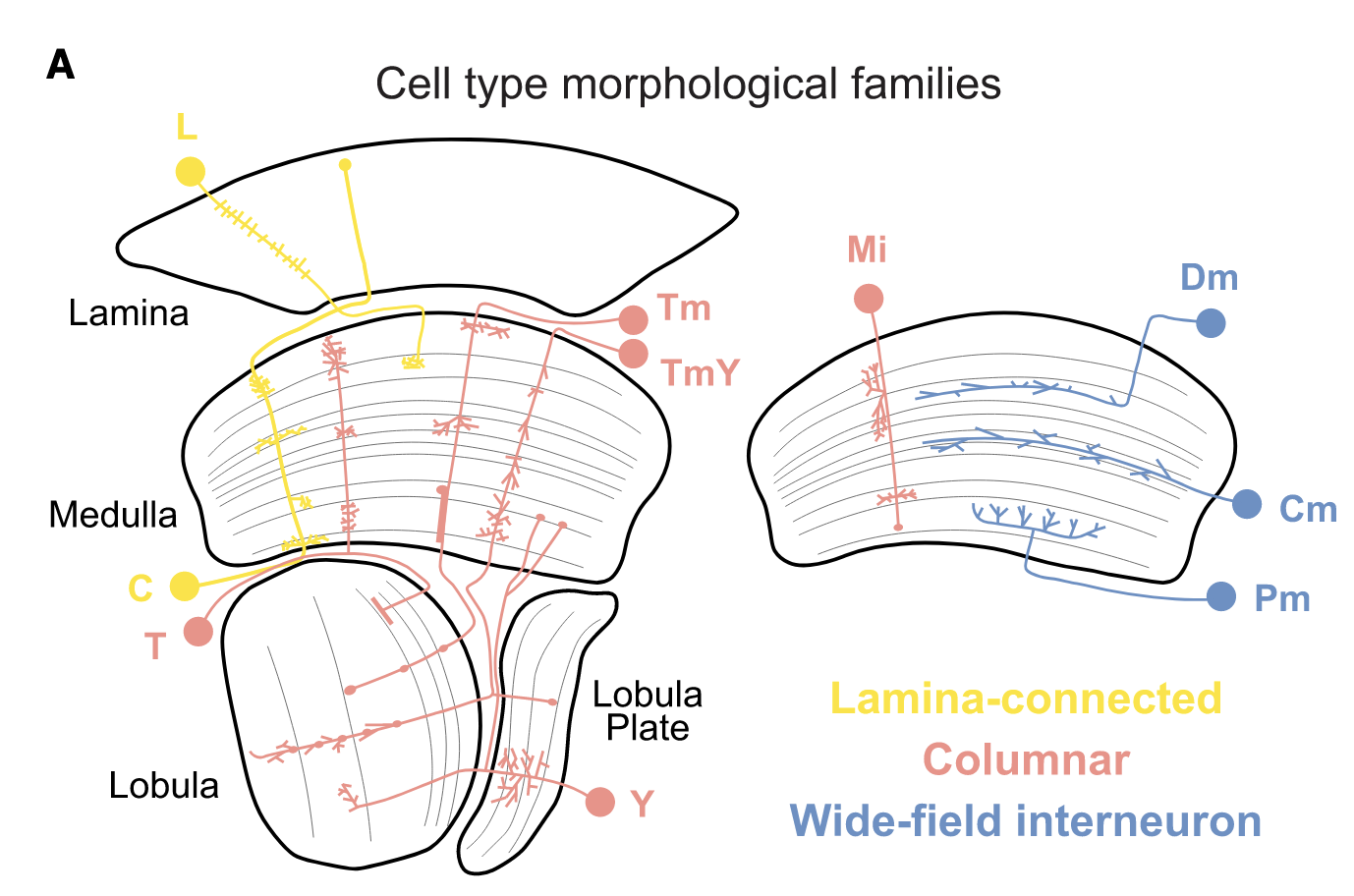
Medulla cell types are divided into three major categories: Lamina-connected cells, Columnar cells, and Wide-field interneurons, each with unique morphological and connectivity features. The core objective of this study is to assess the ability of connectome data to predict diverse functional properties of cell types in the medulla. Specific research questions include: Which visual features can connectomes predict accurately, and which fail? Does the strength of synaptic connections affect functional prediction performance? How can we identify the most functionally predictive subset of connections?
Experimental Methods
SPARC-L Technology
SPARC-L (Sparse Predictive Activity through Recombinase Competition (Layered)) is a key technology in this study, employing a dual recombinase competition system that enables sparse expression of Ca²⁺ indicator GCaMP8m in specific neurotransmitter neurons, achieving random sparse labeling (0.1%–1%). This technology allows simultaneous recording of neuronal activity across multiple cell types, overcoming limitations of traditional methods that can only label a few cell types.
Cell Type Identification and Neural Activity Recording
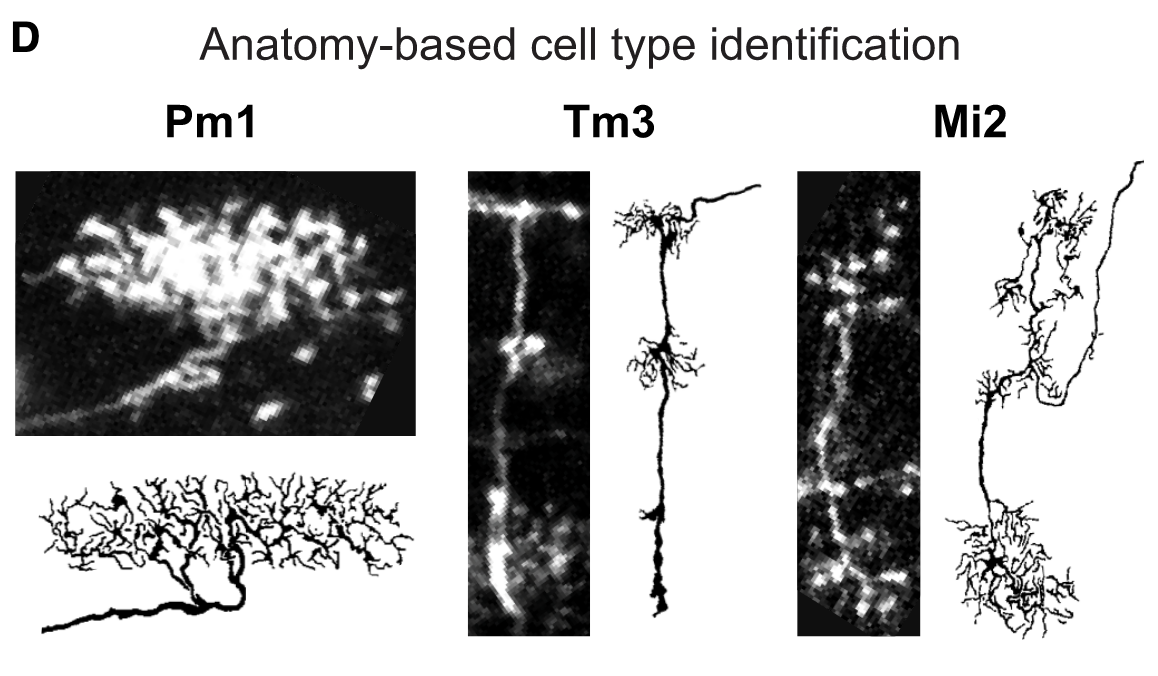
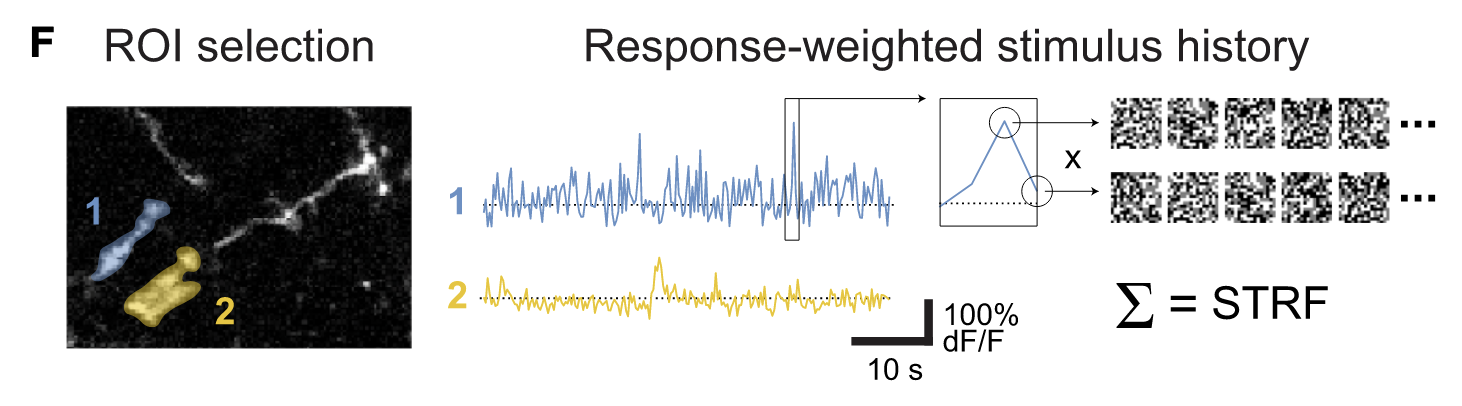
Cell type identification is accomplished by comparing GCaMP-labeled neuronal morphology with type atlases and connectomes. For neural activity recording, the study uses UV / Blue LED stimulation and introduces two key concepts: ROI (Range of Interest, Regions of Interest) refers to regions with high variance during stimulation, used to identify actively responding areas; STRF (Spatiotemporal Receptive Field) is generated for each time point in the response time series of each ROI by weighted summation of stimulus history over the previous 3 seconds, weighted by calcium response amplitude, thereby characterizing the spatiotemporal response properties of neurons to visual stimuli.
Finding 1: Medulla Cell Types Show Significant Differences in Visual Representation Patterns
PCA analysis of single-cell responses reveals that the top 6 components accounting for cross-neuronal variance correspond to 6 types of visual features, capturing the main modes of variation in neuronal visual responses. Further analysis, based on Euclidean distance
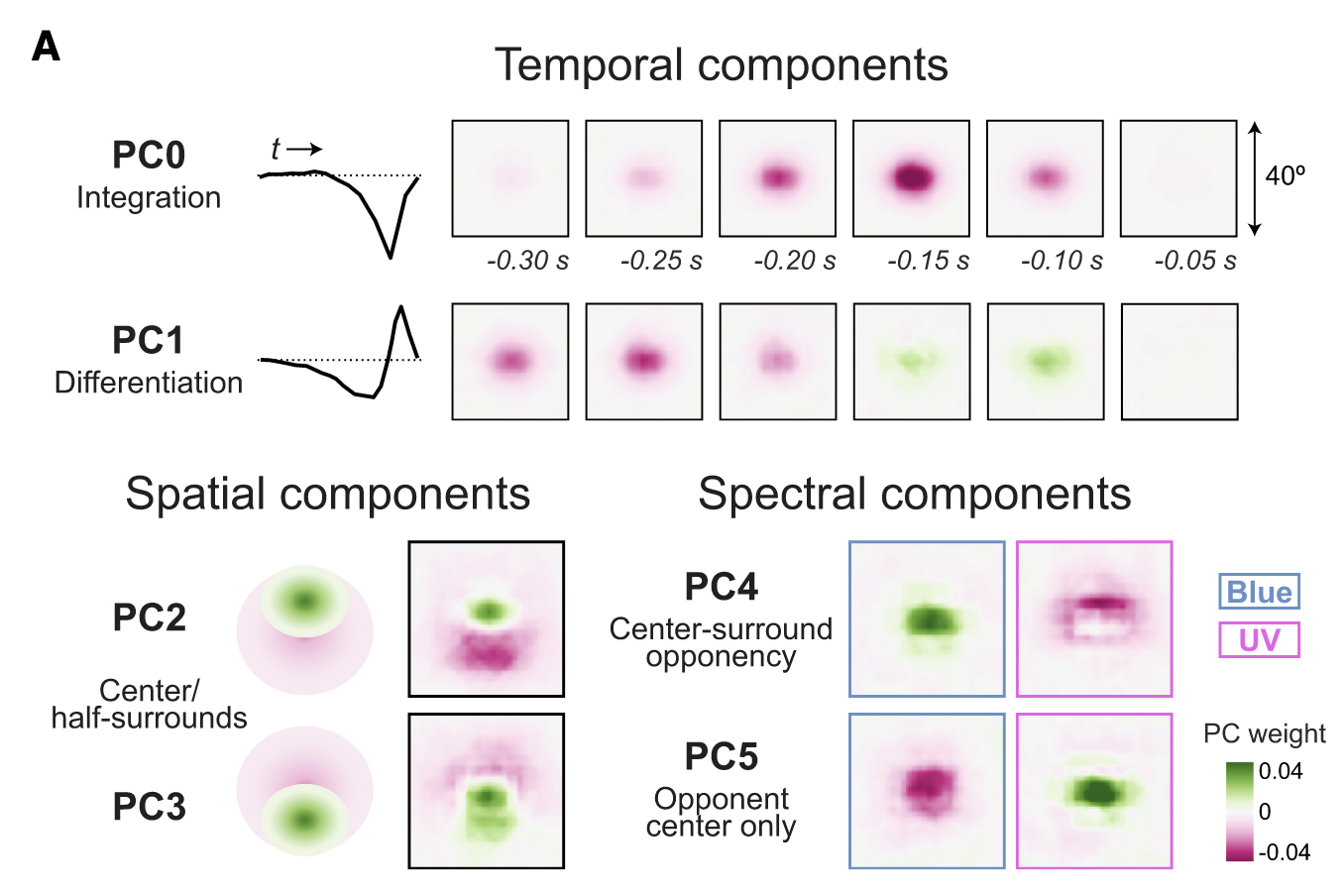
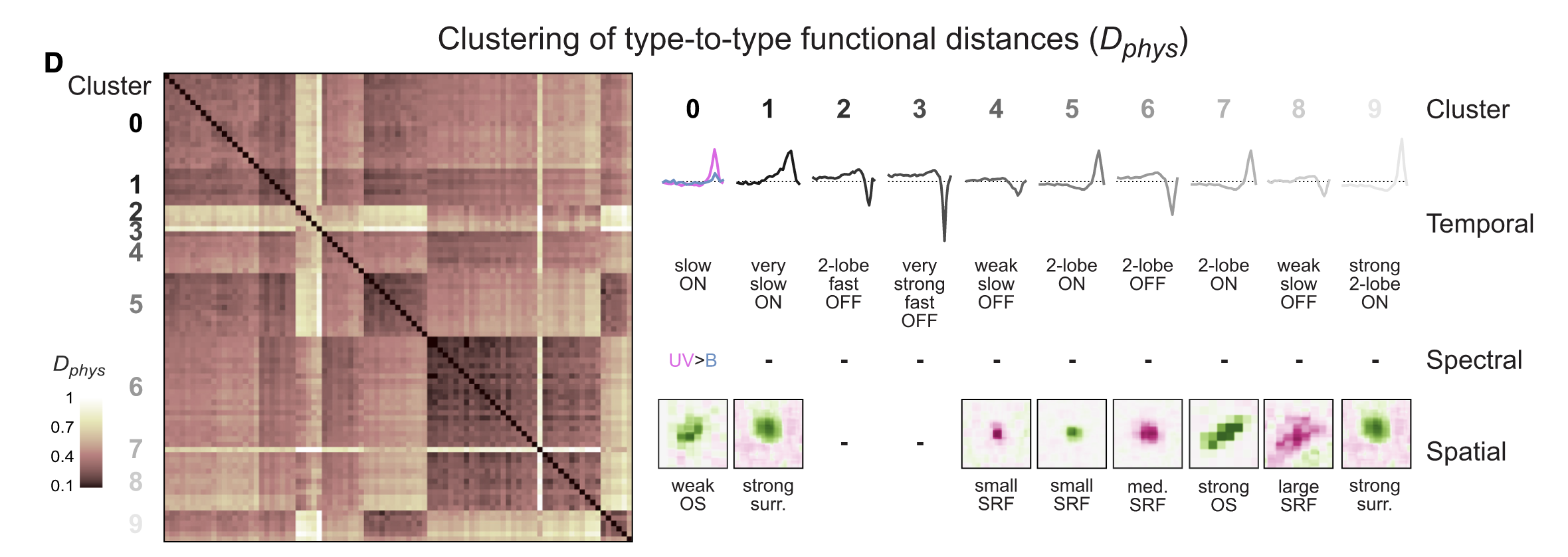
Finding 2: Connectomes Accurately Predict Some Visual Features
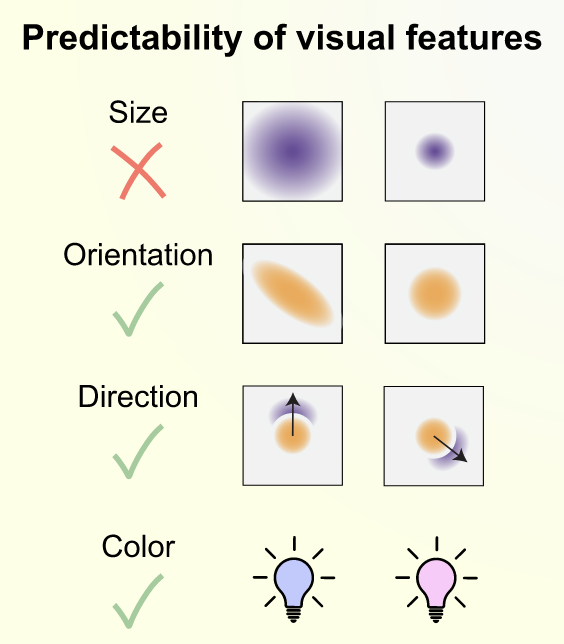
The predictive power of connectomes for visual features is limited, accurately predicting some features while performing poorly for others. Based on connectomes, predictions of feature selectivity were examined for three fundamental aspects of visual processing: For Orientation Selectivity (OS), Dm3 and TmY9 subtypes match predictions; for Direction Selectivity (DS), T4 and Y13 show strong DS, validating the view that DS computed from scratch is relatively rare; for Spectral Preference, Dm9 shows significant UV selectivity, among others. However, the study finds that neurite size cannot predict spatial receptive field area, as the relationship between receptive field area and neurite size is not significant (R=0.19), refuting traditional assumptions and indicating that the relationship between morphological and functional features is not a simple correspondence.
Finding 3: Correlation Between Synaptic Density and Response Strength
Traditional connectome models assume that more synapses lead to stronger responses, but experimental results show this assumption to be overly simplistic. The study finds that "Dense input + high presynaptic count in small cells" is the key condition for strong responses. Specifically: Input number shows no significant correlation with response strength, indicating that quantity alone is insufficient to determine strength; Input density shows significant positive correlation with response strength (R=0.55, p<0.001), indicating that dense input leads to stronger responses; Output number shows no overall correlation but is correlated in small cells (R=0.63), because small, high-density neurons require stronger calcium signals to drive release. These findings reveal the importance of synaptic organization rather than mere quantity in determining neuronal function.
| Parameter | Result | Interpretation |
|---|---|---|
| Input Number | No significant correlation | Quantity alone is insufficient to determine strength |
| Input Density | Significant positive correlation (R=0.55, p<0.001) | Dense input → stronger response |
| Output Number | No overall correlation, but correlated in small cells (R=0.63) | Small, high-density neurons require stronger calcium signals to drive release |
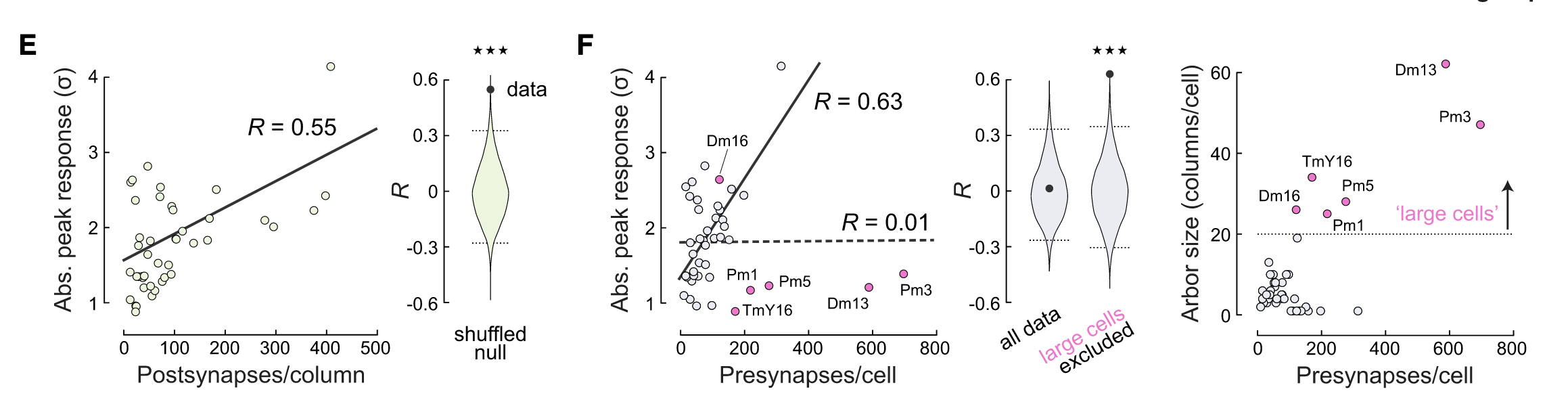
Finding 4: A Minority of Strong Inputs Dominate Postsynaptic Neuronal Function
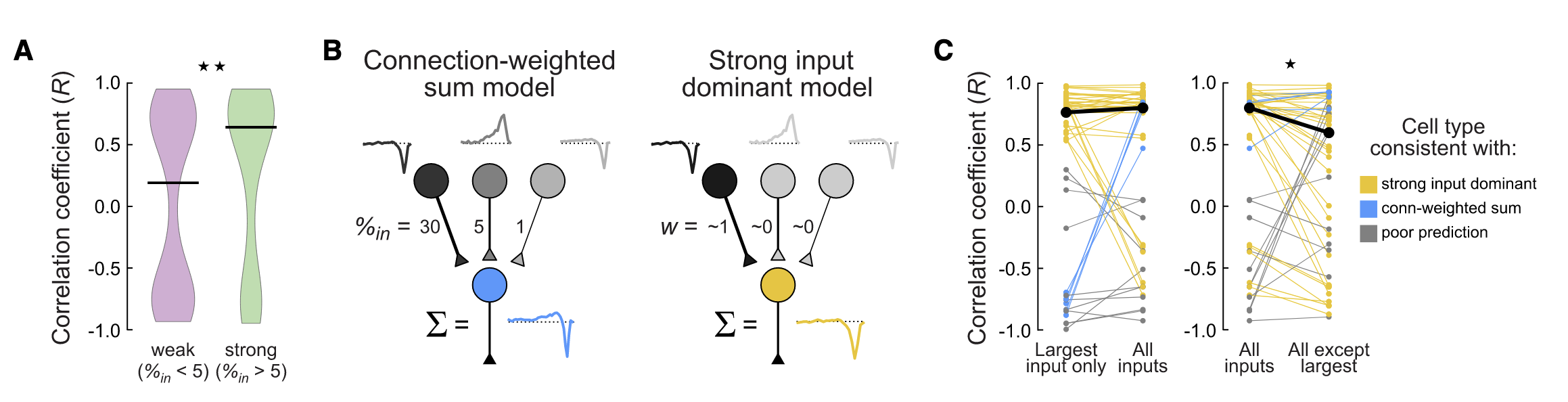
The core finding of this study is the proposal of the "Strong input dominant model": A minority of strong inputs dominate postsynaptic neuronal function, while other weak inputs only serve to fine-tune or provide redundancy. The study defines connections accounting for ≥ 5% of total postsynaptic input as "strong connections," which account for only 10% of all connections but show significantly higher correlation with postsynaptic temporal receptive fields than weak connections, demonstrating the unique importance of strong connections. Comparison between "weighted connection sum model" and "strong input dominant model" shows that the latter has superior prediction performance for 28/43 cell types, and removing the strongest input significantly degrades prediction quality, confirming that strong connections dominate postsynaptic responses. Further analysis reveals that strong inputs of specific cell types tend to be functionally homogeneous, while connectivity distance
Conclusion
This study achieves efficient measurement of neuronal activity across multiple cell types through SPARC-L technology, revealing the limited and selective predictive power of connectomes for function. Connectomes accurately predict some visual features but perform poorly for others, indicating that the relationship between connectomes and function is not a simple one-to-one correspondence. The core insight is that a small number of sparse but strong connections carry most useful information, and these strong connections constrain reliable functional predictions (similar to sparse attention mechanisms in deep learning), providing a new framework for understanding connectome-function relationships. Finally, the study proposes that the relationship between connectome structure and neuronal function can be likened to pointillism: it blurs functional details but captures a coherent whole, a metaphor that vividly describes both the advantages and limitations of connectomes in functional prediction.

Key Takeaways
10% of strong connections (≥ 5% of postsynaptic input) dominate neuronal function—this is the core finding of this study. Although sparse in number, these strong connections carry most of the functionally relevant information and determine the main functional properties of neurons. Input density (not quantity) is the key predictive factor: dense synaptic input drives stronger responses than dispersed large numbers of inputs, challenging the simple assumption that "more synapses = stronger." Similar connectivity patterns do not equal similar functions: the study finds that connectivity distance and functional distance are uncorrelated, indicating that functional similarity cannot be inferred solely from connectivity pattern similarity, and that focus must be on critical strong connection subsets. A minority of strong connections predict function better than all connections: the strong input dominant model outperforms traditional weighted sum models in most cases, confirming the importance of sparse strong connections in functional prediction.
In methodological contributions, SPARC-L technology enables large-scale functional measurements across cell types, breaking through limitations of traditional methods; PCA analysis reveals 6 types of visual features, providing a framework for understanding visual processing; 91 cell types clustered into 10 functional clusters demonstrate hierarchical organization of function; Strong input dominant model outperforms traditional weighted sum model, providing new modeling approaches for connectome analysis.
In theoretical significance, this study challenges the simple assumption that "more synapses = stronger", revealing the importance of synaptic organization; proposes the importance of sparse strong connections, providing new perspectives for understanding functional organization of neural circuits; provides a new framework for understanding connectome-function relationships, and these findings may have implications not only for the Drosophila visual system but also for understanding functional organization of other neural systems.